

In This Guide, You’ll Learn: Why games are essential in dementia and Alzheimer’s care, top 30 cognitive, sensory, physical, and reminiscence games that are most effective, the key safety considerations for caregivers, and how to integrate games into daily routines at home.
Games are widely used as a practical and effective way to support the mental, emotional, and social well-being of seniors, especially those living with dementia. Thoughtfully chosen games for seniors with dementia can help individuals stay engaged, connected, and active in meaningful ways.
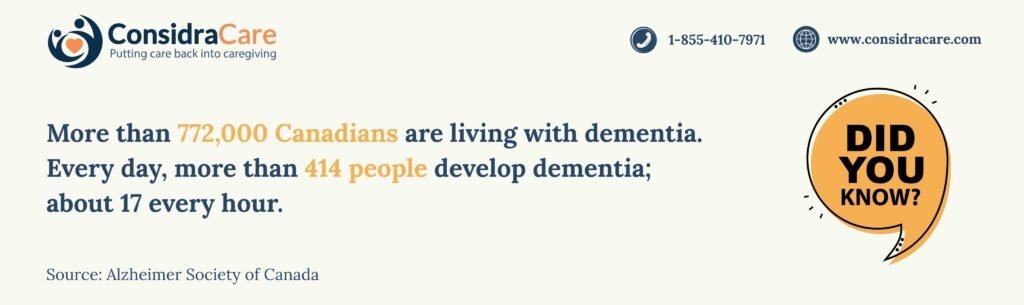
In Canada, as more people live with dementia and care increasingly happens at home and in the community, structured activities such as dementia-friendly games play a critical role in daily care routines.
When matched to a person’s abilities and interests, games can support thinking skills, reduce frustration, encourage social interaction, and reinforce a sense of identity. This article highlights the benefits of games for seniors with dementia and the types most helpful in dementia care.
Why Games Matter for Seniors Living with Dementia?
For seniors living with dementia, games often become a vital way to connect, communicate, and preserve identity. Key benefits of games in dementia care include:
1. Cognitive Stimulation:
Cognitive decline in dementia results from neuronal damage, impaired synaptic communication, and progressive cortical dysfunction. Cognitive stimulation therapy (CST), widely used across Canada, incorporates games as core components due to their accessibility and adaptability.
Although games cannot halt pathology, research consistently shows that structured cognitive stimulation can:
- Support residual cognitive abilities
- Slow the decline in global cognition
- Reinforce procedural memory and implicit memory
- Reduce confusion and apathy
2. Emotional and Behavioural Regulation:
Behavioural and psychological symptoms of dementia (BPSD) such as agitation, anxiety, apathy, and restlessness are common. Therapeutic games help by:
- Reducing boredom and sensory deprivation
- Providing positive distraction from distress triggers
- Supporting serotonin and endorphin release through enjoyment
3. Social Interaction:
Social isolation accelerates cognitive decline. Games create low-pressure opportunities for interaction, enhancing:
- Verbal and non-verbal communication
- Feelings of belonging
- Trust and cooperation with caregivers
- Emotional safety and reassurance
For many families, games become a way to reconnect when conversation becomes difficult.
Top 30 Games for Seniors with Dementia
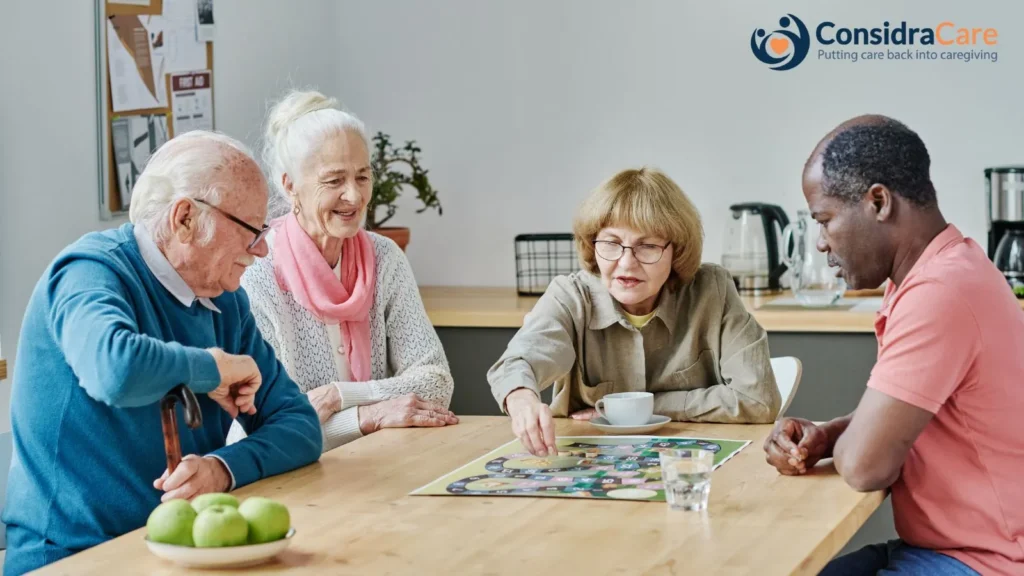
Therapeutic games help stimulate memory, attention, problem-solving, and sensory skills, while providing enjoyment and purpose. Choosing games that match individual abilities is key to maximizing benefits and supporting quality of life.
Cognitive Games:
Cognitive games are structured activities designed to stimulate thinking, memory, attention, and problem-solving skills in seniors living with dementia.
1. Memory Matching:
- How to play: Use cards or objects in pairs; participants flip them to find matches.
- Benefits: Enhances short-term memory, visual recognition, and concentration; encourages social interaction.
2. Large-Piece Jigsaw Puzzles:
- How to play: Assemble puzzles with familiar images or patterns.
- Benefits: Supports visuospatial skills, problem-solving, and procedural memory; provides a sense of accomplishment.
3. Word Searches or Simple Crosswords:
- How to play: Use large-print word search or crossword puzzles with familiar words or themes.
- Benefits: Stimulates language, attention, and memory; encourages cognitive flexibility.
4. Sequencing Activities:
- How to play: Arrange pictures, events, or objects in a logical or chronological order.
- Benefits: Enhances memory recall, logical thinking, and cognitive organization.
5. Interactive Tablet or Touchscreen Games:
- How to play: Use simple apps or games designed for seniors with adjustable difficulty levels.
- Benefits: Provides multisensory stimulation, reinforces cognitive skills, and can be tailored to individual ability.
Recommended resources for cognitive games:
Free Memory & Brain Games Online
Reminiscence Games:
Reminiscence games are designed to stimulate long-term memory by prompting individuals to recall past experiences, personal stories, or familiar cultural references.
These activities are widely used in dementia care to enhance emotional well-being, reduce agitation, and strengthen a sense of identity.
6. Memory-Trigger Cards:
- How to play: Show cards with images of objects, places, or people from past decades.
- Example: Vintage cars, Canadian landmarks, or historical household items.
- Benefits: Activates long-term memory, encourages verbal expression, and supports emotional connections.
7. “Guess the Decade” Games:
- How to play: Present images, music, or objects from a specific decade and ask seniors to identify the era.
- Example: Music from the 1960s, fashion styles from the 1950s.
- Benefits: Enhances temporal orientation, sparks conversation, and reinforces personal identity.
8. Storytelling Prompts:
- How to play: Show an object or photo and invite seniors to share memories or related stories.
- Example: A maple leaf triggers stories about childhood hikes or family trips.
- Benefits: Encourages verbal skills, narrative thinking, and emotional expression.
9. Object Handling and Familiar Items:
- How to play: Provide items from daily life or past occupations to trigger discussion.
- Example: Old kitchen tools, knitting materials, sports equipment.
- Benefits: Supports tactile engagement, procedural memory, and identity reinforcement.
10. Life Timeline Games:
- How to play: Use a large visual timeline; ask seniors to place major life events, jobs, or family milestones in order.
- Benefits: Strengthens autobiographical memory and helps caregivers understand personal history.
Recommended resources for reminiscence games:
Music-Based Games
Music-based games combine entertainment with the benefits of music therapy, making them ideal non-pharmacological interventions for seniors living with dementia.
11. Name That Tune:
- How to play: Play short clips of familiar songs and ask participants to identify the title or artist.
- Example: Canadian classics like Four Strong Winds or Leonard Cohen songs.
- Benefits: Stimulates memory recall, attention, and verbal expression; encourages group participation.
12. Lyric Completion Games:
- How to play: Play or read part of a song and ask seniors to complete the missing lyrics.
- Example: Popular folk or traditional Canadian songs.
- Benefits: Supports language skills, auditory memory, and cognitive engagement.
13. Sing-Along Sessions:
- How to play: Facilitate group singing of familiar songs.
- Example: Community hymns, folk songs, or national songs like “O Canada.”
- Benefits: Reduces anxiety, improves mood, and fosters social cohesion.
14. Rhythm and Percussion Games:
- How to play: Provide simple instruments (maracas, tambourines, hand drums) and ask participants to follow rhythmic patterns.
- Benefits: Improves motor coordination, attention, rhythm recognition, and sensory integration.
15. Music Bingo:
- How to play: Traditional bingo modified with music clips instead of numbers; participants mark songs they recognize.
- Benefits: Combines cognitive stimulation with social engagement and enjoyment.
Recommended resources for music-based games:
Sensory and Tactile Games
Sensory and tactile games are designed to engage the five senses (touch, sight, sound, smell, and taste) to provide meaningful stimulation for seniors with dementia.
16. Textured Matching Boards:
- How to play: Match objects or cards based on texture, shape, or material.
- Example: Smooth vs. rough fabric swatches, soft vs. hard balls.
- Benefits: Enhances tactile perception, attention, and fine motor skills.
17. Sensory Activities:
- How to play: Explore containers filled with safe materials like sand, rice, beads, or water; hide small objects for discovery.
- Example: Small objects hidden in rice for sorting.
- Benefits: Provides calming sensory stimulation, encourages exploration, and supports focus and curiosity.
18. Scent and Smell Games:
- How to play: Identify familiar scents using bottles or scented cards.
- Example: Cinnamon, lavender, pine, or maple syrup.
- Benefits: Stimulates olfactory memory, evokes positive emotions, and can trigger reminiscence.
19. Object Sorting and Handling:
- How to play: Handle and sort everyday items like buttons, shells, or kitchen utensils.
- Benefits: Supports procedural memory, tactile engagement, and provides a sense of accomplishment.
20. Hand-over-Hand Activities:
- How to play: Caregiver guides seniors’ hands in folding, stirring, or arranging objects.
- Benefits: Encourages participation, preserves motor skills, and fosters peer interaction.
Recommended resources for sensory games:
Physical and Movement Games
Physical activity is a critical component of dementia care, supporting not only mobility and balance but also emotional well-being and cognitive function.
Movement-based games provide a safe, structured, and enjoyable way for seniors with dementia to engage their bodies while promoting mental stimulation.
21. Balloon Volleyball:
- How to play: Seniors sit or stand and gently hit a balloon back and forth in a group or one-on-one setting.
- Benefits: Improves hand-eye coordination, reflexes, and motor control; encourages laughter and social interaction.
22. Seated Exercise:
- How to play: Perform gentle stretches, arm raises, leg lifts, or shoulder rotations while seated. Can follow music or simple instructions.
- Benefits: Maintains joint flexibility, improves circulation, reduces stiffness, and is safe for fall-prone seniors.
23. Beanbag or Target Toss:
- How to play: Throw beanbags at baskets, hoops, or targets from a seated or standing position.
- Benefits: Enhances gross motor skills, accuracy, focus, and provides a sense of accomplishment.
- How to play: Seniors copy the movements of a caregiver or facilitator, such as clapping, stretching, or simple dance steps.
- Benefits: Improves attention, motor coordination, pattern recognition, and engagement.
24. Follow-the-Leader / Mimic Movements:
How to play: Seniors copy the movements of a caregiver or facilitator, such as clapping, stretching, or simple dance steps.
Benefits: Improves attention, motor coordination, pattern recognition, and engagement.
25. Gentle Walking or Movement Circuits:
- How to play: Supervised walking indoors or outdoors with simple obstacle stations or activity points (e.g., stop to pick up an object).
- Benefits: Promotes mobility, endurance, cardiovascular health, reduces restlessness, and encourages social participation.
Recommended resources for physical games:
Simple Tabletop Games
Tabletop games are structured, low-risk activities that engage cognitive and social skills while providing opportunities for meaningful participation.
They are particularly useful for seniors with mild to moderate dementia, as they often rely on preserved procedural memory and familiar routines.
26. Dominoes:
- How to play: Match numbers or patterns on domino tiles.
- Benefits: Stimulates attention, pattern recognition, and hand-eye coordination; encourages social interaction.
27. Large-Print Playing Cards:
- How to play: Simple card games like Go Fish, War, or matching pairs.
- Benefits: Supports memory, sequencing, turn-taking, and engagement in small groups.
28. Magnetic Board Activities:
- How to play: Arrange magnetic shapes, letters, or images on a board.
- Example: Magnetic puzzles, letters for spelling, or tic-tac-toe.
- Benefits: Encourages fine motor skills, creativity, problem-solving, and reduces frustration.
29. Tabletop Activities:
- How to play: Organize objects or cards by color, size, or type.
- Benefits: Supports executive functioning, cognitive processing, and procedural memory; provides purposeful engagement.
30. Connect 4:
- How to play: Drop discs into a vertical grid to make a row of four.
- Benefits: Enhances strategic thinking, hand-eye coordination, and turn-taking in a social setting.
Recommended resources for tabletop games:

How Caregivers Can Integrate Games into Daily Routine?
- Incorporate short, frequent sessions rather than long activities. (10-20 minutes)
- Offer games at times when the senior is most alert (typically morning or early afternoon).
- Maintain a calm, clutter-free environment.
- Use large, high-contrast materials for low-vision individuals.
- Adopt gentle verbal cues and step-by-step guidance.
- Celebrate participation, not performance.
- Document responses to different types of games for future planning.
Safety Considerations for Dementia Care Games
- Stop activities that cause distress or agitation
- Avoid competitive scoring if frustration arises
- Supervise all movement-based games
- Respect refusals; participation should never be forced
- Monitor fatigue and sensory sensitivity
How to Choose Games for Seniors with Dementia by Stage?
Selecting appropriate activities for dementia patients at each stage is essential to prevent frustration and maximize benefit.
Mild Dementia:
- Cognitive games
- Simple tabletop games
- Word games and puzzles
- Light strategy and sequencing
Moderate Dementia:
- Reminiscence games
- Music-based activities
- Sensory and tactile games
- Guided cognitive games
Late-Stage Dementia:
- Sensory stimulation
- Music listening or sing-alongs
- Hand-over-hand activities
- Passive or observational engagement
Key Principle: Always match the game to the person’s current abilities, not their past abilities.
Get In-Home Dementia Care Services!
ConsidraCare provides expert, nurse-managed in-home dementia care delivered by caregivers certified in Gentle Persuasive Approaches (GPA). We focus on compassionate, respectful support that helps seniors remain safe and engaged at home. Contact us to learn how we can support your family.
Get in touch for a free assessment today!

Final Thoughts:
Games are a versatile and impactful tool in dementia, offering meaningful engagement, cognitive stimulation, and emotional support for seniors. By selecting activities that align with individual abilities, preferences, and care environments, caregivers can promote independence, enhance quality of life, and foster social connection.
With thoughtful implementation, games not only provide enjoyment but also reinforce dignity, identity, and meaningful engagement in everyday life.
Frequently Asked Questions – FAQs
Select games based on the individual’s cognitive level, interests, physical abilities, and sensory needs. Start with simple activities and gradually introduce more challenging games as appropriate.
Short, frequent sessions (10–20 minutes, 1–2 times daily) are more effective than long sessions. Observe engagement and energy levels to determine the optimal schedule.
Games cannot prevent or cure dementia, but they help maintain cognitive abilities, reduce behavioral symptoms, and improve emotional well-being. They are most effective when combined with a comprehensive care plan.
– Create a calm, clutter-free environment.
– Use high-contrast or large-print materials.
– Offer gentle guidance and encouragement.
– Focus on participation rather than performance.
– Personalize games to reflect the senior’s history, preferences, and abilities.
Yes, simple tablet apps or touchscreen games can provide multisensory stimulation, cognitive exercises, and entertainment. Choose apps with adjustable difficulty and intuitive interfaces to ensure accessibility.
Absolutely. Group games promote social interaction, cooperation, and shared enjoyment, which can reduce isolation and enhance mood. Small groups are often ideal to prevent overstimulation.